
KELP Group · Energy performance
Stop wasting your energy. Put it to work.
From audit to maintenance, our five entities handle every energy use on your site, the whole energy chain. A single partner to cut your consumption and carbon emissions and get the most out of your sites.
Why the group exists
In the energy transition, the obstacle is not technical. It is organisational.
A site manager wants to cut energy use. For a single project, he has to coordinate a dozen contractors himself: engineering offices, installers, electricians, automation engineers, funders, maintenance contractors, each with their own quote, schedule and deadlines. All it takes is for one to fall behind for everyone else to wait, and for a problem to come up for them to shift the responsibility onto one another. Whatever nobody planned for in their scope ends up as hidden costs. Untenable.
KELP was founded in 2023 to answer this: all these trades under one roof, one point of contact, one contract, one responsibility, from audit to maintenance. The turnkey offer for the energy transition.
"We created KELP to radically simplify the energy transition for businesses."
Ten contracts, ten schedules, ten contacts.
One point of contact, one contract, one responsibility.
The regulatory calendar
The deadlines that apply to your sites
French regulations and EU legislation: each deadline shows where it applies. Some have already passed, others need preparing now, and every year of waiting makes the trajectory more expensive to catch up on. The BACS Decree thresholds are rated installed power (kW), not consumption.
- Since October 2019in forceFrance
Tertiary Decree: in force
The decree of 23 July 2019 has applied since 1 October 2019 to every commercial or public building of 1,000 m² and more: cut energy consumption along the trajectory below, and report consumption every year on .
- Since April 2024in forceFrance
BACS Decree: new buildings
Every new commercial or public building whose heating or air-conditioning systems exceed 70 kW of rated power must be fitted with a building automation and control system (a ).
- Since January 2025in forceFrance
BACS Decree: over 290 kW of power
Existing commercial and public buildings whose heating or air-conditioning systems exceed 290 kW of rated installed power must be fitted with a (BMS): a system that measures and records consumption, controls the equipment and flags drifts, in practice class A or B under the EN ISO 52120 standard. This is a power rating (kW), not an annual consumption.
- Every 30 SeptemberannuelFrance
Tertiary Decree: OPERAT reporting
The previous year's consumption must be reported to on the platform. Failing to report is penalised.
- 2026 → 2034trajectoireEuropean Union
Industrial carbon allowances: the end of free allocation
In the EU carbon market (EU ETS), free allowances for steel, aluminium, cement, fertilisers and hydrogen have been falling since 2026 and will disappear in 2034, replaced by the Carbon Border Adjustment Mechanism. And since 2026, an installation that does not implement the recommendations of its energy audit that pay back in three years or less loses 20% of its free allowances.
- Since July 2026trajectoireFrance
National low-carbon strategy (SNBC 3)
The decree of 16 July 2026 sets France's carbon budgets up to 2038. Industry goes from 56 million tonnes of CO₂ a year (2024 to 2028) to 28 (2034 to 2038), buildings from 51 to 21. It is the State's roadmap: it shapes the support schemes and regulations to come.
- 1 January 2027upcomingEuropean Union
F-gases: new chillers
New packaged above 12 kW can no longer be placed on the market with a whose global warming potential is 750 or more; below 12 kW, the threshold is 150, unless required for safety. Existing installations can keep running and be maintained.
- 2027 · 2028 · 2030upcomingFrance
The end of gas in new buildings
The decree of 12 September 2026 bans gas boilers, even as back-up, in new construction, with exceptions such as emergency equipment: for building permits filed from 2027 for housing, from 2028 for public buildings and from 2030 for other buildings, including commercial and office buildings.
- 1 January 2028upcomingEuropean Union
Carbon allowances for heating and transport (ETS2)
Gas and heating oil suppliers will have to buy an allowance for every tonne of CO₂ emitted by buildings, road transport and small industry: a cost passed on to bills. Planned for 2027, the start has been postponed to 2028 by the EU regulation of 11 March 2026. Fuels used in agriculture, greenhouses included, are excluded unless a Member State decides otherwise.
- 2030upcomingFrance
BACS Decree: 70 to 290 kW of power
Deadline postponed from 2027 to 1 January 2030 by the decree of 26 December 2025, to align with the European directive.
- 2030 · 2033trajectoireEuropean Union
Renovating the worst-performing non-residential buildings
The EU Energy Performance of Buildings Directive (2024/1275) requires renovating the worst-performing 16% of non-residential buildings by 2030, then 26% by 2033. The thresholds that will apply in France have yet to be set by transposition.
- 2030 · 2040 · 2050trajectoireFrance
Tertiary Decree: the Éco Énergie Tertiaire trajectory
For buildings of 1,000 m² or more: −40% consumption in 2030, −50% in 2040, −60% in 2050 compared with the baseline.
The audit determines which obligations apply to your building.
KELP Group
The group and its turnkey offer
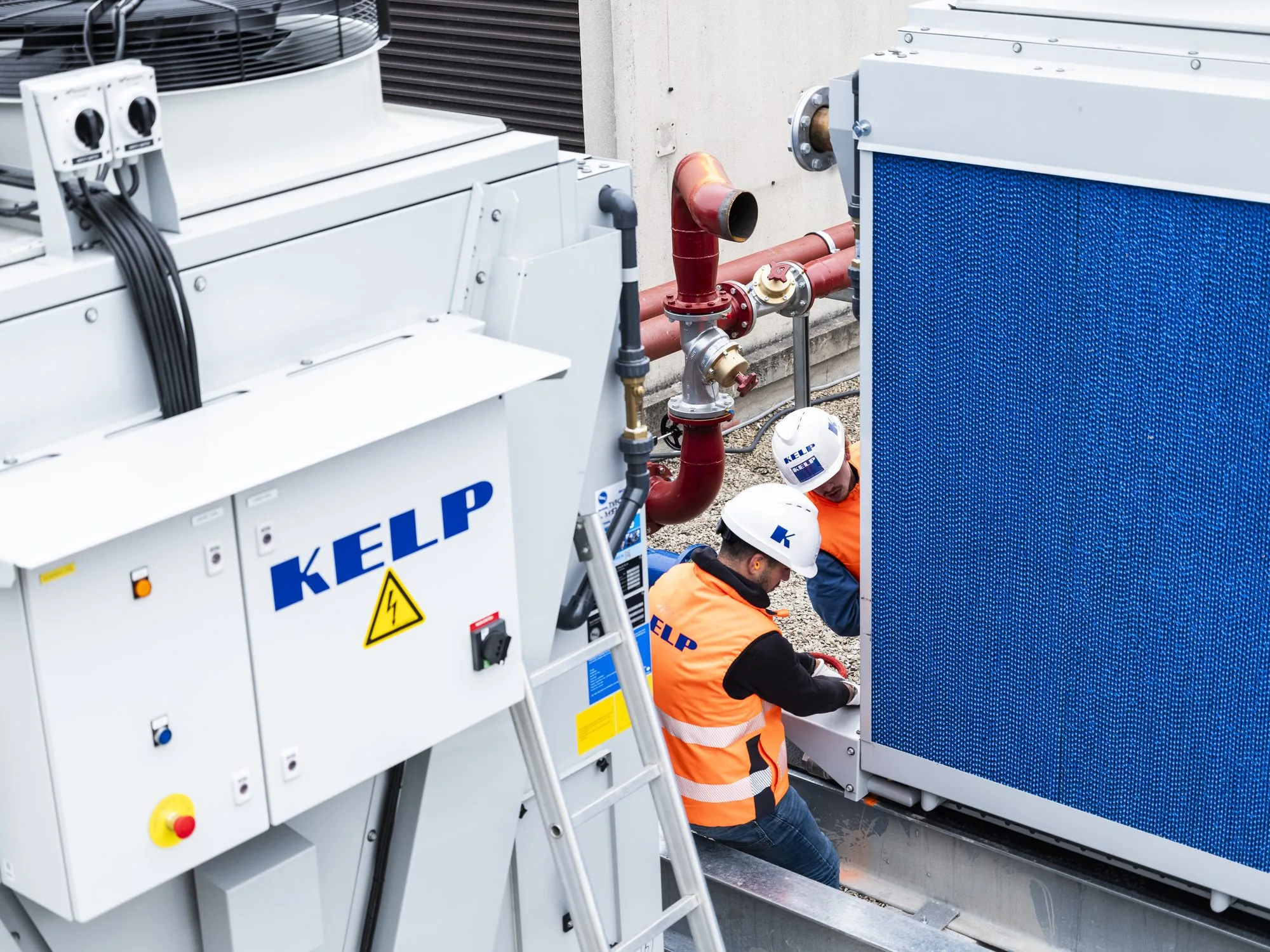
One pilot for all the works: our subsidiaries study, install, connect and maintain, look for the funding your project is eligible for and handle the applications from A to Z, with carefully chosen site partners, under our control and our responsibility.
Five subsidiaries, five steps
One contract, from audit to maintenance
Each subsidiary is a fully fledged, independent company with its own trade, teams and clients: you can call on one without the others. Placed end to end in the order of a project, they form our turnkey offer: one point of contact who steers the study, the funding, the works, the connection and the upkeep; one contract; one party answerable for the whole. This turnkey offer, from audit to maintenance, is what makes KELP.
- 01

KELP Bureau d'Études
Design & sizeStep 01 · Audit and studies
Our engineers come to your site to measure what is consumed and what is lost. They compare the possible solutions and size the right one: power, equipment, connections. You know what you stand to gain before committing to anything.
- 02

KELP Énergies
FundStep 02 · Costing and funding
We cost the project and look for everything that can fund it: (CEE), grants, third-party financing. We put the applications together and follow them through to payment.
- 03
KELP Thermiques
Install & renovateStep 03 · Supply and installation
Our teams order, install and hydraulically connect the equipment: refrigeration, , air handling, networks, , and more. By helicopter or crane when access demands it. Your site keeps running during the works.
- 04
KELP Systèmes
Automate & superviseStep 04 · Electrical connection and supervision
Our electricians and automation engineers connect the electrical equipment and make your installations controllable: PLCs, , regulation, remote consumption monitoring. The installation complies with the .
- 05
KELP Maintenances
MaintainStep 05 · Commissioning and upkeep
We commission the installation, then we maintain it: preventive visits, repairs, a contract tailored to your site. And if you wish, we commit by contract to the savings achieved.
You can also live this journey from the client's point of view in our immersive experience.








Our Projects
Some of our achievements
 6 dry coolers
Helicopter-lifted over a hospital
A 1,054-bed hospital group: six months of works, with no disruption for patients.
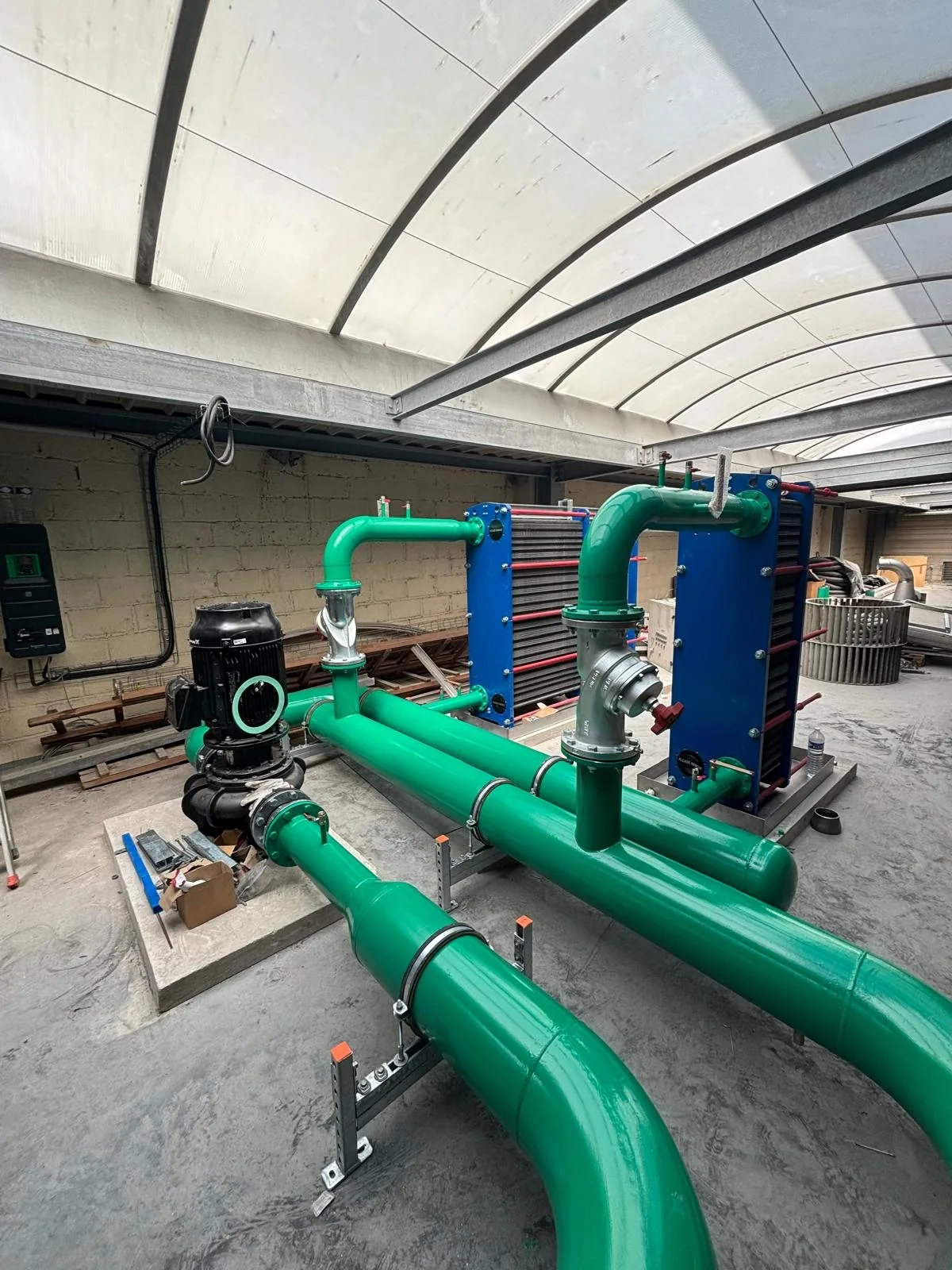 9 017 kW
Of heat recovered
Glass-ceramic manufacturer: heat recovered from the and the now preheats the air handled by twelve .
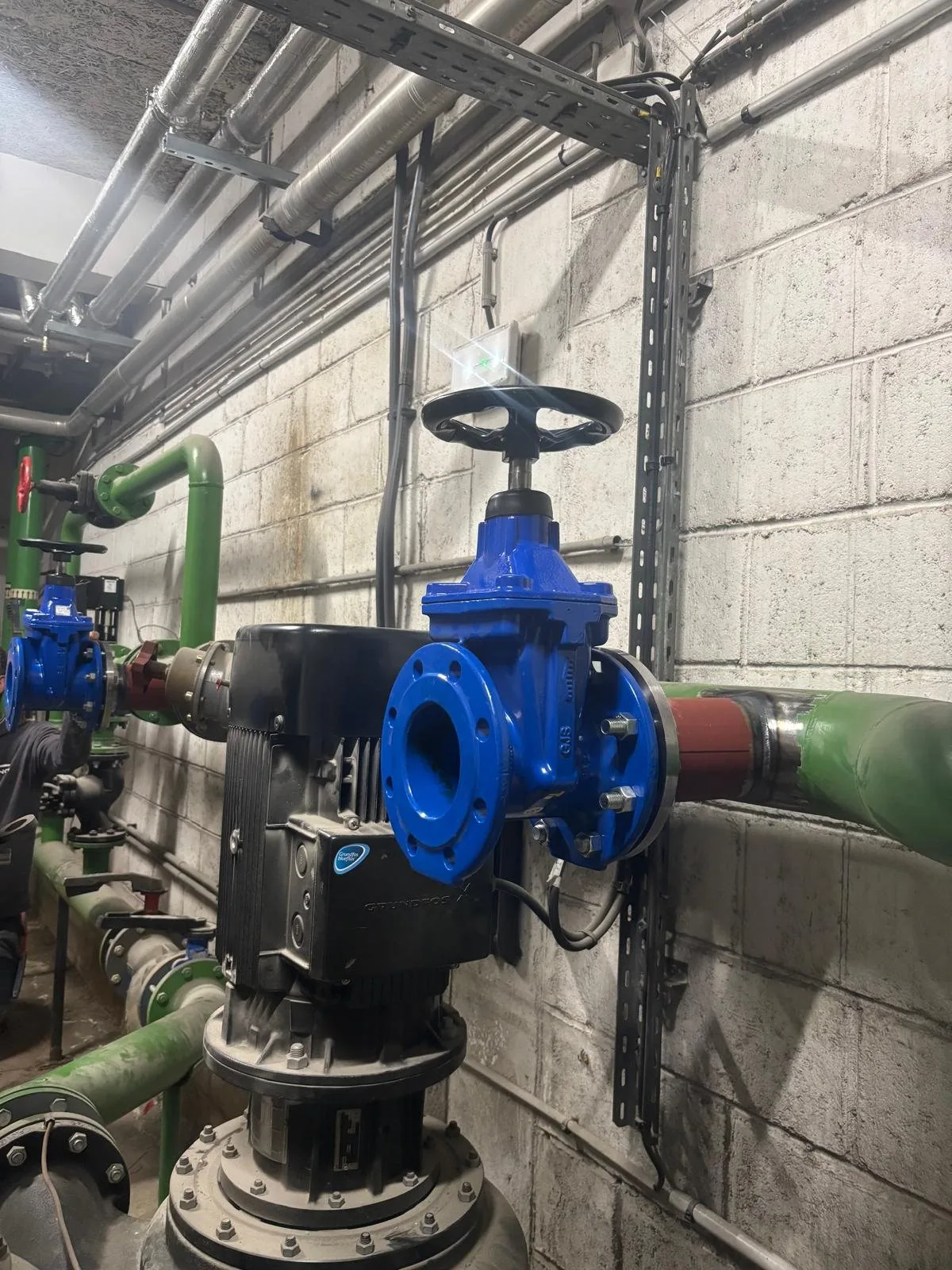 Hot tapping
Without draining the networks
Connecting a to a network that stays in operation.


























Assessing your site's savings potential
The audit quantifies the achievable savings and identifies the financing available for your project.
Request an audit